TSB41AB3MPFPEP

TSB41AB3MPFPEP
Mfr. #:
TSB41AB3MPFPEP
설명:
1394 Interface IC V62/03612-02XE -IEEE 1394A Three-Po
수명 주기:
이 제조업체의 새 제품입니다.
데이터 시트:
TSB41AB3MPFPEP 데이터 시트
배달:
DHL FedEx Ups TNT EMS
지불:
T/T Paypal Visa MoneyGram Western Union
ECAD Model:
추가 정보:
TSB41AB3MPFPEP 추가 정보 TSB41AB3MPFPEP Product Details
제품 속성
속성 값
제조사:
텍사스 인스트루먼트
제품 카테고리:
1394 Interface IC
장착 스타일:
SMD/SMT
패키지/케이스:
HTQFP-80
시리즈:
TSB41AB3-EP
제품:
IEEE 1394
최소 작동 온도:
- 55 C
최대 작동 온도:
+ 125 C
포장:
쟁반
설명/기능:
ENHANCED PRODUCT IEEE 1394A THREE-PORT CABLE TRANSCEIVER/ARBITER
상표:
텍사스 인스트루먼트
습기에 민감한:
상품 유형:
1394 Interface IC
지원되는 프로토콜:
IEEE 1394
공장 팩 수량:
96
하위 카테고리:
인터페이스 IC
부품 번호 별칭:
V62/03612-02XE
단위 무게:
0.012984 oz
Tags
TSB41AB3, TSB41AB, TSB41A, TSB41, TSB4, TSB
Service Guarantees

We guarantee 100% customer satisfaction.

Quality Guarantees

We provide 90-360 days warranty.

If the items you received were not in perfect quality, we would be responsible for your refund or replacement, but the items must be returned in their original condition.
Our experienced sales team and tech support team back our services to satisfy all our customers.

we buy and manage excess electronic components, including excess inventory identified for disposal.
Email us if you have excess stock to sell.

Email: [email protected]
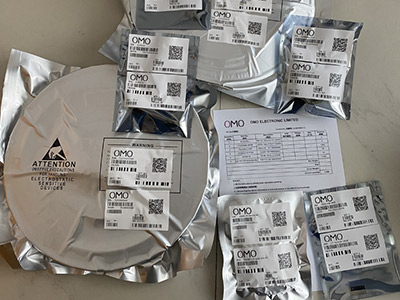
Step1: Vacuum Packaging with PL
Step1:
Vacuum Packaging with PL
Step2: Anti-Static Bag
Step2:
Anti-Static Bag
Step3: Packaging Boxes
Step3:
Packaging Boxes
***as Instruments
Enhanced product IEEE 1394a 3-port cable transceiver/arbiter 80-HTQFP -55 to 125
***et
Transceiver 1TX 1RX 400Mbps 80-Pin HTQFP EP Tray
***i-Key
IC TRANSCEIVER HALF 6/6 80HTQFP
***ASI
The TSB41AB3 provides the digital and analog transceiver functions required to implement a three-port node in a cable-based IEEE 1394 network. Each cable port incorporates two differential line transceivers. The transceivers include circuitry to monitor the line conditions as needed for determining connection status, for initialization and arbitration, and for packet reception and transmission. The TSB41AB3 is designed to interface with a line layer controller (LLC), such as the TSB12LV21, TSB12LV22, TSB12LV23, TSB12LV26, TSB12LV31, TSB12LV41, TSB12LV42, or TSB12LV01A.
***OMO Electronic
The TSB41AB3 requires only an external 24.576-MHz crystal as a reference. An external clock may be used instead of a crystal. An internal oscillator drives an internal phase-locked loop (PLL), which generates the required 393.216-MHz reference signal. This reference signal is internally divided to provide the clock signals used to control transmission of the outbound encoded strobe and data information. A 49.152-MHz clock signal is supplied to the associated LLC for synchronization of the two chips and is used for resynchronization of the received data. The power-down (PD) function, when enabled by asserting the PD terminal high, stops operation of the PLL.
***AS INSRUMENTS
The TSB41AB3 supports an optional isolation barrier between itself and its LLC. When the ISO input terminal is tied high, the LLC interface outputs behave normally. When the ISO terminal is tied low, internal differentiating logic is enabled, and the outputs are driven such that they can be coupled through a capacitive or transformer galvanic isolation barrier as described in Annex J of IEEE Std 1394-1995 and in the 1394a-2000 Supplement (section 5.9.4) (hereafter referred to as Annex J type isolation). To operate with TI bus holder isolation, the ISO terminal on the PHY must be high.
***AS
Data bits to be transmitted through the cable ports are received from the LLC on two, four, or eight parallel paths (depending on the requested transmission speed). They are latched internally in the TSB41AB3 in synchronization with the 49.152-MHz system clock. These bits are combined serially, encoded, and transmitted at 98.304, 196.608, or 392.216 Mbits/s (referred to as S100, S200, and S400 speed, respectively) as the outbound data-strobe information stream. During transmission, the encoded data information is transmitted differentially on the TPB cable pair(s), and the encoded strobe information is transmitted differentially on the TPA cable pair(s).
***as Instruments Inc.
During packet reception the TPA and TPB transmitters of the receiving cable port are disabled, and the receivers for that port are enabled. The encoded data information is received on the TPA cable pair, and the encoded strobe information is received on the TPB cable pair. The received data-strobe information is decoded to recover the receive clock signal and the serial data bits. The serial data bits are split into two-, four-, or eight-bit parallel streams (depending upon the indicated receive speed), resynchronized to the local 49.152-MHz system clock, and sent to the associated LLC. The received data is also transmitted (repeated) on the other active (connected) cable ports.
***as Instruments (TI)
Both the TPA and TPB cable interfaces incorporate differential comparators to monitor the line states during initialization and arbitration. The outputs of these comparators are used by the internal logic to determine the arbitration status. The TPA channel monitors the incoming cable common-mode voltage. The value of this common-mode voltage is used during arbitration to set the speed of the next packet transmission. In addition, the TPB channel monitors the incoming cable common-mode voltage on the TPB pair for the presence of the remotely supplied twisted-pair bias voltage.
***AS INSTRUMENTS INC
The TSB41AB3 provides a 1.86-V nominal bias voltage at the TPBIAS terminal for port termination. The PHY contains three independent TPBIAS circuits. This bias voltage, when seen through a cable by a remote receiver, indicates the presence of an active connection. This bias voltage source must be stabilized by an external filter capacitor of 1 µF.
***AS INSTRUMEN
The line drivers in the TSB41AB3, operating in a high-impedance current mode, are designed to work with external 112- line-termination resistor networks in order to match the 110- cable impedance. One network is provided at each end of a twisted-pair cable. Each network is composed of a pair of series-connected 56- resistors. The midpoint of the pair of resistors that is directly connected to the twisted-pair A terminals is connected to its corresponding TPBIAS voltage terminal. The midpoint of the pair of resistors that is directly connected to the twisted-pair B terminals is coupled to ground through a parallel R-C network with recommended values of 5 k and 220 pF. The values of the external line-termination resistors are designed to meet the standard specifications when connected in parallel with the internal receiver circuits. An external resistor connected between the R0 and R1 terminals sets the driver output current, along with other internal operating currents. This current setting resistor has a value of 6.34 k ±1%.
***ASIN
When the power supply of the TSB41AB3 is off while the twisted-pair cables are connected, the TSB41AB3 transmitter and receiver circuitry presents a high-impedance signal to the cable and does not load the TPBIAS voltage at the other end of the cable.
***AS
When the TSB41AB3 is used without one or more of the ports brought out to a connector, the twisted-pair terminals of the unused ports must be terminated for reliable operation. For each unused port, the TPB+ and TPB. terminals can be tied together and then pulled to ground through a 1-k resistor, or the TPB+ and TPB– terminals can be connected to the suggested termination network. The TPA+ and TPA– terminals of an unused port can be left unconnected. The TPBias terminal can be connected to a 1-µF capacitor to ground or left floating.
***TEXAS
The TESTM, SE, and SM terminals are used to set up various manufacturing test conditions. For normal operation, it is recommended that the TESTM terminal be connected to VDD through a 1-k resistor, and SE be tied to ground through a 1-k resistor, while SM is connected directly to ground.
***
Four package terminals are used as inputs to set the default value for four configuration status bits in the self-ID packet and are tied high through a 1-k resistor or hardwired low as a function of the equipment design. The PC0–PC2 terminals are used to indicate the default power-class status for the node (the need for power from the cable or the ability to supply power to the cable). See Table 9 for power-class encoding. The C/LKON terminal is used as an input to indicate that the node is a contender either isochronous resource manager (IRM) or for bus manager (BM).
***AS INSRUMENT
The TSB41AB3 supports suspend/resume as defined in the IEEE 1394a-2000 specification. The suspend mechanism allows pairs of directly-connected ports to be placed into a low-power conservation state (suspended state) while maintaining a port-to-port connection between 1394 bus segments. While in the suspended state, a port is unable to transmit or receive data transaction packets. However, a port in the suspended state is capable of detecting connection status changes and detecting incoming TPBias. When all three ports of the TSB41AB3 are suspended, all circuits except the band gap reference generator and bias detection circuits are powered down resulting in significant power savings. For additional details of suspend/resume operation refer to the 1394a-2000 specification. The use of suspend/resume is recommended for new designs.
***AS INSRUMENT
The port transmitter and receiver circuitry is disabled during power down (when the PD input terminal is asserted high), during reset (when the RESET input terminal is asserted low), when no active cable is connected to the port, or when controlled by the internal arbitration logic. The TPBias output is disabled during power down, during reset, or when the port is disabled as commanded by the LLC.
***as Instruments Inc.
The CNA (cable-not-active) terminal provides a high when there are no twisted-pair cable ports receiving incoming bias (i.e., they are either disconnected or suspended) and can be used along with LPS to determine when to power down the TSB41AB3. The CNA output is not debounced. When the PD terminal is asserted high, the CNA detection circuitry is enabled (regardless of the previous state of the ports) and a pulldown is activated on the RESET terminal so as to force a reset of the TSB41AB3 internal logic.
***AS INST
The link power status (LPS) terminal works with the C/LKON terminal to manage the power usage in the node. The LPS signal from the LLC is used in conjunction with the LCtrl bit (see Table 1 and Table 2 in the APPLICATION INFORMATION section) to indicate the active/power status of the LLC. The LPS signal is also used to reset, disable, and initialize the PHY-LLC interface (the state of the PHY-LCC interface is controlled solely by the LPS input regardless of the state of the LCtrl bit).
***AS INST
The LPS input is considered inactive if it remains low for more than 2.6 µs and is considered active otherwise. When the TSB41AB3 detects that LPS is inactive, it places the PHY-LLC interface into a low-power reset state in which the CTL and D outputs are held in the logic zero state and the LREQ input is ignored; however, the SYSCLK output remains active. If the LPS input remains low for more than 26 µs, the PHY-LLC interface is put into a low-power disabled state in which the SYSCLK output is also held inactive. The PHY-LLC interface is also held in the disabled state during hardware reset. The TSB41AB3 continues the necessary repeater functions required for normal network operation regardless of the state of the PHY.LLC interface. When the interface is in the reset or disabled state and LPS is again observed active, the PHY initializes the interface and returns it to normal operation.
***AS INST
When the PHY-LLC interface is in the low-power disabled state, the TSB41AB3 automatically enters a low-power mode if all ports are inactive (disconnected, disabled, or suspended). In this low-power mode, the TSB41AB3 disables its internal clock generators and also disables various voltage and current reference circuits, depending on the state of the ports (some reference circuitry must remain active in order to detect new cable connections, disconnections, or incoming TPBias, for example). The lowest power consumption (the ultralow power sleep mode) is attained when all ports are either disconnected, or disabled with the port’s interrupt enable bit cleared. The TSB41AB3 exits the low-power mode when the LPS input is asserted high or when a port event occurs which requires that the TSB41AB3 become active in order to respond to the event or to notify the LLC of the event (incoming bias is detected on a suspended port, a disconnection is detected on a suspended port, a new connection is detected on a nondisabled port). The SYSCLK output becomes active (and the PHY-LLC interface is initialized and becomes operative) within 7.3 ms after LPS is asserted high when the TSB41AB3 is in the low-power mode.
***
The PHY uses the C/LKON terminal to notify the LLC to power up and become active. When activated, the C/LKON signal is a square wave of approximately 163-ns period. The PHY activates the C/LKON output when the LLC is inactive and a wake-up event occurs. The LLC is considered inactive when either the LPS input is inactive, as described above, or the LCtrl bit is cleared to 0. A wake-up event occurs when a link-on PHY packet addressed to this node is received, or conditionally when a PHY interrupt occurs. The PHY deasserts the C/LKON output when the LLC becomes active (both LPS active and the LCtrl bit set to 1). The PHY also deasserts the C/LKON output when a bus-reset occurs unless a PHY interrupt condition exists which otherwise causes C/LKON to be active.
부분 # 설명 재고 가격
TSB41AB3MPFPEP
DISTI # 296-23555-ND
IC CABLE TXRX/ARBITER 80-HTQFP
RoHS: Compliant
Min Qty: 1
Container: Tray
152In Stock
  • 1056:$8.7780
  • 576:$9.5700
  • 192:$10.7580
  • 96:$12.2100
  • 10:$12.7380
  • 1:$13.8600
TSB41AB3MPFPEP
DISTI # TSB41AB3MPFPEP
Transceiver 1TX 1RX 400Mbps 80-Pin HTQFP EP Tray - Trays (Alt: TSB41AB3MPFPEP)
RoHS: Compliant
Min Qty: 96
Container: Tray
Americas - 0
  • 96:$10.9900
  • 192:$10.6900
  • 384:$10.2900
  • 576:$9.9900
  • 960:$9.7900
TSB41AB3MPFPEP
DISTI # TSB41AB3MPFPEP
Transceiver 1TX 1RX 400Mbps 80-Pin HTQFP EP Tray - Trays (Alt: TSB41AB3MPFPEP)
RoHS: Compliant
Min Qty: 1
Container: Tray
Europe - 0
  • 1:€10.4900
  • 10:€9.8900
  • 25:€9.3900
  • 50:€8.9900
  • 100:€8.5900
  • 500:€8.1900
  • 1000:€7.8900
TSB41AB3MPFPEPEnhanced Product Ieee 1394A Three-Port Cable Transceiver/Arbiter480
  • 1000:$7.5000
  • 750:$7.5200
  • 500:$8.3800
  • 250:$9.1100
  • 100:$9.5700
  • 25:$10.9600
  • 10:$11.3500
  • 1:$12.2100
TSB41AB3MPFPEP
DISTI # 595-TSB41AB3MPFPEP
1394 Interface IC Enhanced Product Ieee 1394A Three-Port Cable Transceiver/Arbiter 80-HTQFP -55 to 125
RoHS: Compliant
0
    V62/03612-02XE
    DISTI # 595-V62/03612-02XE
    1394 Interface IC 3-Port Cable Transceiver
    RoHS: Compliant
    0
      영상 부분 # 설명
      TSB41AB1PHPG4

      Mfr.#: TSB41AB1PHPG4

      OMO.#: OMO-TSB41AB1PHPG4

      1394 Interface IC One-Port Cable Xcvr/Arbiter
      TSB41AB1PHPG4 QFP48

      Mfr.#: TSB41AB1PHPG4 QFP48

      OMO.#: OMO-TSB41AB1PHPG4-QFP48-1190

      신규 및 오리지널
      TSB41AB1PQFP-641394PAP

      Mfr.#: TSB41AB1PQFP-641394PAP

      OMO.#: OMO-TSB41AB1PQFP-641394PAP-1190

      신규 및 오리지널
      TSB41AB1ZQER

      Mfr.#: TSB41AB1ZQER

      OMO.#: OMO-TSB41AB1ZQER-1190

      신규 및 오리지널
      TSB41AB3I

      Mfr.#: TSB41AB3I

      OMO.#: OMO-TSB41AB3I-1190

      신규 및 오리지널
      TSB41AB3IPFP

      Mfr.#: TSB41AB3IPFP

      OMO.#: OMO-TSB41AB3IPFP-TEXAS-INSTRUMENTS

      IC CABLE TXRX/ARBIT 3PRT 80HTQFP
      TSB41AB3P

      Mfr.#: TSB41AB3P

      OMO.#: OMO-TSB41AB3P-1190

      신규 및 오리지널
      TSB41AB1GQE

      Mfr.#: TSB41AB1GQE

      OMO.#: OMO-TSB41AB1GQE-TEXAS-INSTRUMENTS

      1394 Interface IC One-Port Cable Xcvr/Arbite
      TSB41AB1ZQE-64

      Mfr.#: TSB41AB1ZQE-64

      OMO.#: OMO-TSB41AB1ZQE-64-TEXAS-INSTRUMENTS

      1394 Interface IC One-Port Cable Xcvr/Arbite
      TSB41AB1PHP

      Mfr.#: TSB41AB1PHP

      OMO.#: OMO-TSB41AB1PHP-TEXAS-INSTRUMENTS

      IC CABLE XCVR/ARBITER 48-HTQFP
      유효성
      재고:
      Available
      주문 시:
      2000
      수량 입력:
      TSB41AB3MPFPEP의 현재 가격은 참고용이며 최상의 가격을 원하시면 판매팀 [email protected]으로 문의 또는 다이렉트 이메일을 보내주십시오.
      참고 가격(USD)
      수량
      단가
      내선 가격
      1
      US$13.86
      US$13.86
      10
      US$12.74
      US$127.40
      25
      US$12.08
      US$302.00
      100
      US$10.76
      US$1 076.00
      250
      US$10.23
      US$2 557.50
      500
      US$9.57
      US$4 785.00
      1000
      US$8.78
      US$8 780.00
      시작
      최신 제품
      • bq25700A Battery Buck-Boost Charge Controller
        OMO Electronic offers the bq25700A SMBus multi-chemistry battery buck-boost charge controller with system power monitor and processor hot monitor.
      • Compare TSB41AB3MPFPEP
        TSB41AB3 vs TSB41AB31 vs TSB41AB3I
      • TMUX1208 Analog Multiplexer (Mux)
        OMO Electronic' TMUX1208 general purpose analog mux reduces system complexity and board size in a wide variety of applications including building automation.
      • TPD3S014/44 Current Limit Switch
        OMO Electronic' TPD3S014/44’s are integrated devices that feature a current limited load switch and a two channel Transient Voltage Suppressor (TVS).
      • OPA388 Operational Amplifier
        OMO Electronic' OPA388 precision op-amp provides rail-to-rail input output operation in a low-noise, zero-drift, zero-crossover device.
      • TLV9052 RRIO Op-Amp
        OMO Electronic' TLV9052 5 MHz, low-power, RRIO op-amp offers an ultra-high slew rate and low supply current per channel providing excellent AC performance.
      Top