
By 18650 Battery 3456
Voltage Specification Analysis
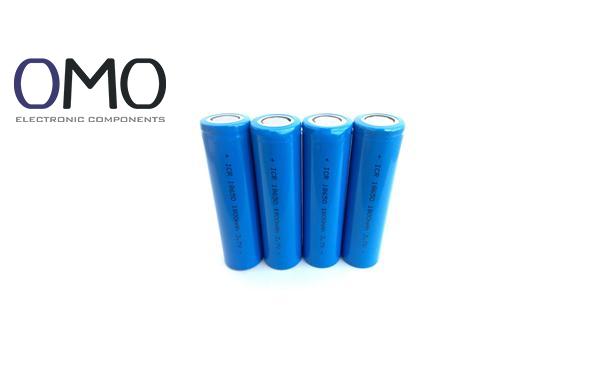
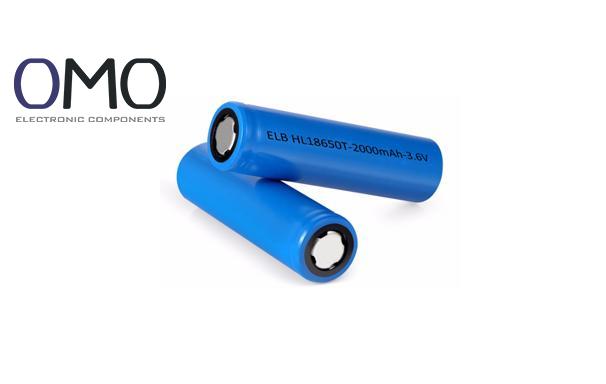
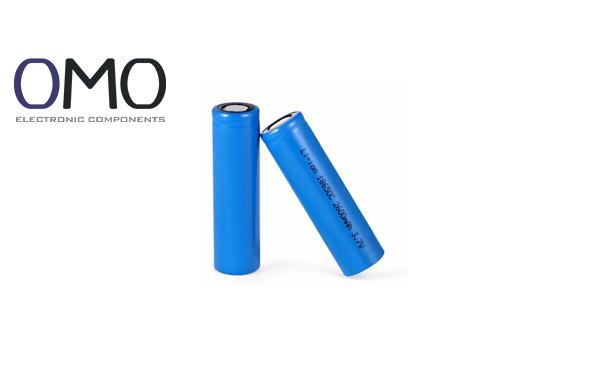
The 18650 battery is a standard cylindrical lithium-ion battery. Its name shows its physical size: 18mm in diameter and 65mm in length. The last "0" means it has a round shape.
This standard size works with over 90% of electronic devices worldwide. It is a common choice in both industry and consumer products.
| Parameter | Typical Range | Industry-Leading Performance |
| Voltage | 3.6–3.7V | Stable output with ±1% variation |
| Capacity | 1200–3500mAh | High-density models reach 4000mAh |
| Energy Density | 200–265Wh/kg | 3 times more than NiMH (nickel-metal hydride) batteries |
For example, one top brand model weighs only 45g but gives 12.6Wh of energy. It improves volume efficiency by 40% compared to traditional batteries.
Sony launched the first 18650 battery in 1994 with only 800mAh capacity.
Today, thanks to nano-silicon anode (negative electrode) technology, top models reach over 3500mAh.
The upgrade speed is faster than Moore’s Law, with energy density growing 8% every year.
Tesla’s early Roadster used 6,831 18650 batteries and achieved a 400km driving range.
Compared to lead-acid batteries, power density is 5 times higher, and charging efficiency reaches 92%.
In solar energy storage, 18650 battery modules last for up to 2000 cycles.
They save 60% in maintenance costs compared to gel batteries.
One brand’s smart BMS (Battery Management System) monitors each cell’s voltage in real time, with a 99.7% fault detection rate.
Thermal runaway (dangerous overheating) tests show:
| Trigger Condition | Critical Value | Protection Technology |
| Overcharge Voltage | >4.25V | Three-level voltage monitoring chip |
| External Short Circuit | >80A for 3 seconds | PTC (Positive Temperature Coefficient) resettable fuse |
Cycle life test curves under 0.5C charge/discharge conditions show:
Typical discharge curves show:
In multi-cell series setups, some smart battery packs use active balancing systems.
They keep voltage differences within ±10mV, saving 30% more energy than passive balancing systems.
| Type | Nominal Voltage | Energy Density | Cycle Life |
| NMC (Nickel Manganese Cobalt) | 3.6V | 265Wh/kg | 800 cycles |
| LiFePO₄ (Lithium Iron Phosphate) | 3.2V | 160Wh/kg | 2000 cycles |
One industrial-grade LiFePO₄ battery keeps 85% capacity even at -20°C, with a voltage drop of less than 5%. It is ideal for polar exploration equipment.
Constant current discharge test results:
| Current Rate | Measured Capacity | National Standard Tolerance |
| 0.2C | 3350mAh | ±3% |
| 1C | 3180mAh | ±5% |
A lab-grade analyzer uses four-wire measurement, keeping internal resistance error under ±0.5mΩ.
It is 10 times more accurate than traditional devices.
An 18650 lithium-ion battery typically operates at a nominal voltage of 3.7 volts.
An 18650 battery with a nominal voltage of 3.7 V is typically considered depleted when its voltage reaches 3 V, marking its fully discharged state.
18650 lithium-ion batteries typically exhibit a service life ranging from 3 to 5 years. While their longevity is theoretically determined by multiple variables in usage conditions, implementing proper care and maintenance practices can effectively enhance their operational lifespan.
The 18650 battery typically operates within a voltage range of 3.6V to 4.2V during discharge, with its standard (or commonly referenced) discharge voltage being 3.7V.