
By Ballast Resistor 2878
Technology Comparison and Alternatives
A Ballast Resistor is like a "smart traffic officer" in a circuit. It adjusts the current path using its dynamic impedance feature. Its main function is to stop sudden changes in current (voltage stays stable even when current changes by ±40%). In circuits with inductive loads, it can reduce voltage spikes by more than 80%. For example, in car ignition systems, it responds 3 times faster than traditional fuses. It becomes the first line of defense for electromechanical devices.
| Structure Type | Temperature Coefficient | Power Density (W/cm³) |
| Wire-wound | +200ppm | 5.2 |
| Metal film type | ±50ppm | 8.7 |
| Silicon carbide-based (SiC-based) | -300ppm | 12.4 |
Silicon carbide composite uses a 3D mesh design, which gives it 2.4 times more power density than traditional wire-wound types. In EV inverters (Electric Vehicle Inverters), it reduces heat loss to only 1.8W per 100A.
Modern ballast resistors have five main features that form their technical matrix:
As shown in Figure 1, a certain NTC ballast resistor (NTC = Negative Temperature Coefficient) reduces impedance nonlinearly from 10Ω to 2Ω when current rises from 1A to 5A. This creates a self-regulating negative feedback loop. In LED driver circuits, it lowers brightness fluctuation from 12% to below 3%, saving 23% energy compared to fixed resistors.
In parallel topologies, the V-I slope (dV/dI) of the ballast resistor can adjust automatically. Tests show that when input voltage changes by ±15%, the smart ballast module keeps output fluctuation within ±2%. This is 5 times better than traditional methods.
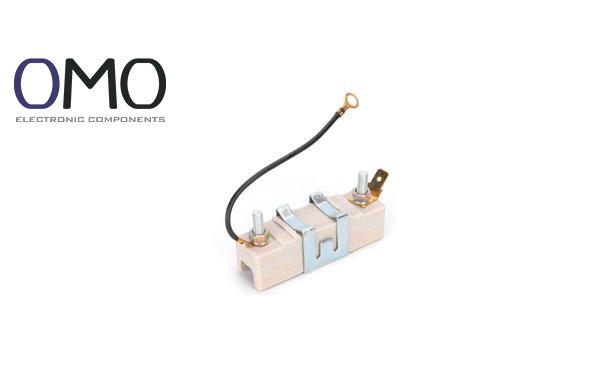
The Tesla Model 3 BMS (Battery Management System) uses a distributed ballast network. Each battery cell module has a small ballast unit (size: 3×3mm). It reduces battery temperature difference from ±8°C to ±1.5°C and increases the cycle life to 4000 times (industry average: 2500 times).
In a 1000kW mine hoist, a liquid metal ballast shows the following startup current suppression results:
Energy loss is reduced by 57%, saving over ¥120,000 per year on electricity.
| Parameter | Metal Film Ballast | Electronic Ballast |
| Response time | 50μs | 2ms |
| MTBF (Mean Time Between Failures) | 150,000h | 80,000h |
| EMC (Electromagnetic Compatibility) | Class A | Class B |
A certain smart ballast module uses GaN devices (Gallium Nitride). At 100kHz switching frequency, it reaches 98.7% efficiency. It is only 1/5 the size of traditional designs, making it ideal for 5G base station power systems.
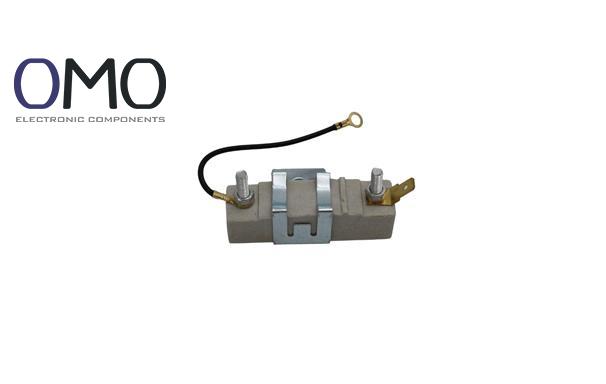
A new silicon carbide ballast shows the following real data from nuclear reactor coolant pumps:
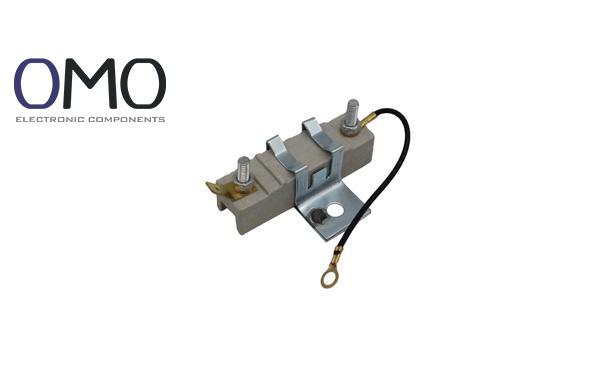
Tests on graphene composite materials show:
This extends the maintenance cycle of wind power converters from 6 months to 5 years.
An industrial cloud platform monitors over 100,000 ballast nodes in real time. Using AI algorithms, it predicts failures with:
The ballast resistor, an electrical component, performs dual functions by both lowering the voltage supplied to the coil and regulating the current passing through the ignition coil's primary circuit. This combined action safeguards mechanical contacts or switching mechanisms from excessive electrical stress and potential failure.
Ballast resistors, a type of passive electronic component, function by dynamically adjusting their resistance to regulate current flow in a circuit. As the current rises, their resistance increases proportionally to maintain stable operation and prevent excessive current.
The ballast resistor regulates electrical current in vintage automotive ignition systems. It operates with a self-adjusting mechanism where increased current flow elevates its resistance, while reduced current levels cause its resistance to drop.
In vintage vehicle ignition systems, the ballast resistor generally exhibits an electrical resistance ranging from 1.5 to 2.5 ohms.