
By Starter Solenoid 2629
Fault Signs and Diagnosis (With Diagnosis Table)
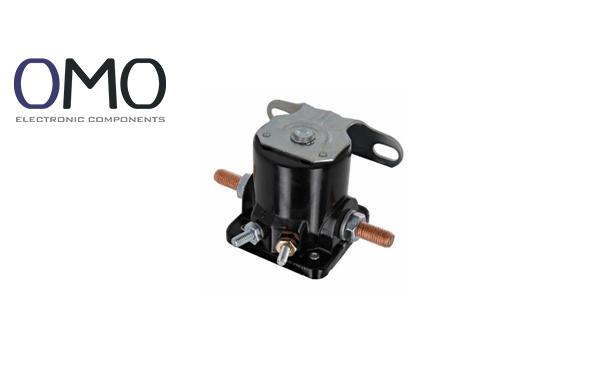
The Starter Solenoid is a high-current electromagnetic relay. It usually sits on top of the starter motor or mounts on the engine bay firewall. It acts as a bridge between the battery and the starter motor. This fist-sized part controls strong electric current and plays a key role in starting the vehicle's engine.
The starter solenoid does three main jobs:
This part brings three big benefits:
Thanks to its fine design, the voltage drop when it works is less than 50 mV, while regular models often exceed 100 mV. This helps the starter motor get full power.
When you turn the key to the start position, a small current (less than 10 amps) flows through the control coil. This creates a strong magnetic field that pulls the plunger quickly. It reacts in less than 200 ms, almost instantly.
The plunger does two things at once:
This dual action works smoothly and precisely like a clock.
When the battery sends a peak current (about 300 amps in cars) through the closed contacts, the coil stays powered to hold the plunger in place.
Once the engine starts and the key returns, the magnetic field stops. Then, the spring resets everything to standby.
| Fault Type | Main Behavior | Possible Cause |
| Completely Silent | No sound when turning the key | Control circuit open, coil fully broken |
| Clicking Repeats | Fast clicking with flickering lights | Weak battery, badly corroded contacts |
| Single Click Only | One click, but engine doesn’t crank | Burnt contacts, detached copper disk |
| Works On/Off | Fails at certain temps or vibrations | Loose or broken internal connection |
Measure these when the solenoid fails:
Any abnormal point helps locate the problem.
Use an insulated screwdriver to connect the input and output terminals.
If the starter motor runs fast (ammeter shows over 250A), the solenoid is faulty, but the motor is fine. Make sure the gear is in neutral.
Disconnect the battery negative. Use a multimeter to check the resistance between input and output.
XX brand uses silver-tin oxide coating; after five years, resistance only rises <15%, better than standard parts.
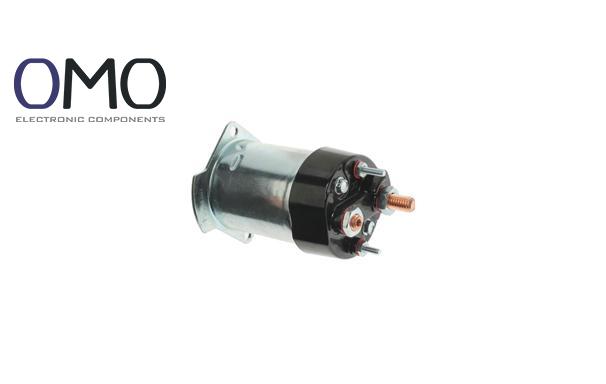
Main contacts often form carbon layers from arc damage. Low-quality copper contacts lose up to 0.8 mm after many uses.
(XX brand’s alloy contacts lose only 0.05 mm.)
Also common: coil short circuits or open circuits.
Long-term shocks may break the return spring or bend the plunger, making the gear stick.
In rare cases, if the starter motor locks, the sudden torque can break the mounting bracket.
In humid areas (like coasts), electrochemical corrosion can form inside.
Heat can make plastic crack (standard types soften at 80℃, while XX nylon resists up to 125℃).
Constant engine vibration wears down wires faster.
| Item | Suggested Time | Key Action |
| Terminal torque check | Every 3 months | Use torque wrench to tighten to 15Nm |
| Infrared heat scan | Every 6 months | Watch for >20℃ temp difference in use |
| Control voltage drop test | Every 10,000 km | If drop is >0.8V, check the circuit |
| Drain hole check | Before/after rainy season | Keep holes clear to prevent water buildup |
The Starter Solenoid plays key roles in many areas:
Used in all gasoline and diesel cars.
Start-stop systems need stronger solenoids (over 3× switching times).
Use copper housings and ceramic insulation to resist salt fog.
Large ships use dual solenoid systems for safety.
The starter solenoid is an essential starting system component. It incorporates the driving coil for a heavy-duty relay (contactor), which serves to connect the battery directly to the starter motor.
The starter solenoid is an electromagnetic actuator within a vehicle's ignition system. Its purpose is to bridge the battery's high-current flow to the starter motor when the engine ignition is activated.
Depending on the make and model of your car, the exact count of transmission shift solenoids will differ. Automatic transmissions typically feature two to five.
Yes. A defective solenoid has the potential to damage your battery, deplete its charge, overload the electrical system, or result in inefficient engine starting. When experiencing repeated battery drain or symptoms of stress, you should test the solenoid during troubleshooting.