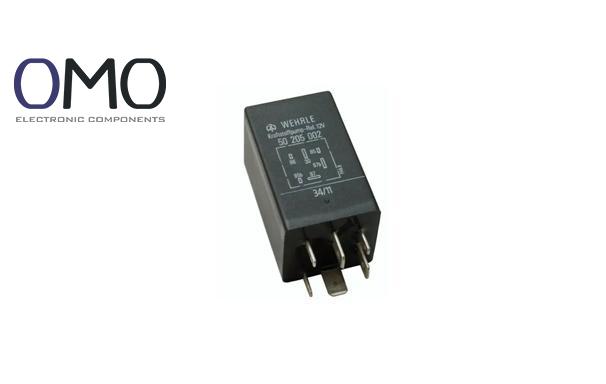
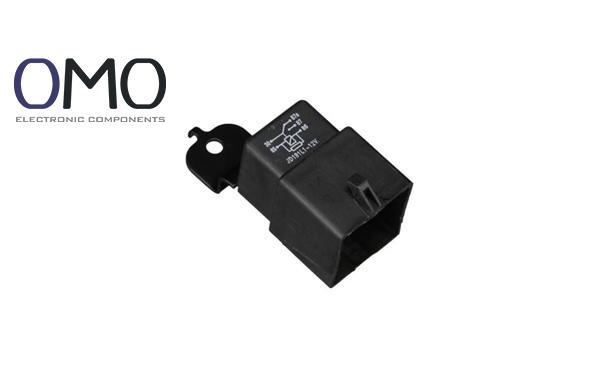
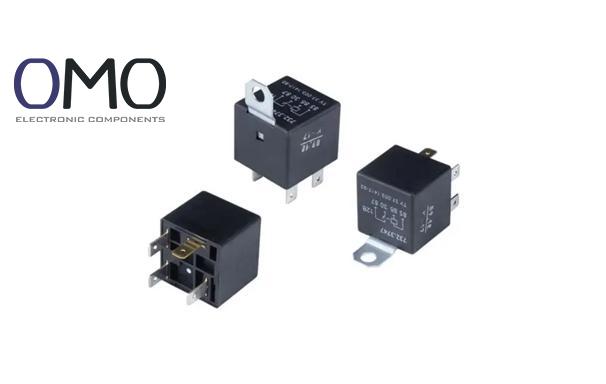
The fuel pump relay is not just a simple switch. It is an important controller in the car’s electrical system. It is an electromagnetic switch device. Its main job is to safely use a small current to control a large current. A small signal from the Engine Control Module (ECM/PCM) or ignition switch can turn the big current on or off. This current goes to the fuel pump motor and is usually more than 10 amps.
Main Features and Working Principle:
Electromagnetic action: The coil inside gets electricity and makes a magnetic field to move parts.
Small controls big: A small current (in milliamps) safely controls a large current (over 10A).
Main parts: It has a control coil, main contacts (switch), and several terminals.
Standard shape and pins: Most relays use standard designs to make replacement easy.
Detailed Working Process:
Power ON and pull-in: When the ignition is “ON” or the engine starts, the ECM or ignition sends a small current to the coil (terminals 85/86). The coil makes a magnetic field and pulls the armature.
Contacts close: The armature moves the main contacts (terminals 30-87) to close the circuit.
Pump runs: The battery sends high current through contacts (30 → 87) to the fuel pump motor. The pump starts and builds fuel pressure.
Power OFF and release: When the ignition is off or engine stops, the coil loses power. The spring pushes the armature back, and the contacts (30-87) open. The fuel pump stops.
Main Functions and Location:
Safety switch: It stops the fuel supply after a crash to prevent fuel leakage.
Load switcher: It protects the ECM and ignition switch from high current damage.
ECM smart control: It helps the ECM control fuel priming, running, and emergency shut-off.
Key link and isolation: It connects low-voltage control to high-power action with safety isolation.
Common Locations:
Fuse/relay box in the engine bay (most common)
Under dashboard or side panel fuse box
Separate relay boxes in specific areas
Identification Tip:
Always check the diagram on the fuse box cover or the repair manual. Identify the relay by label or number. Don’t guess by appearance alone.
Contact Material Upgrade Comparison:
Contact Type
Old Material
D Brand Alloy Contact
Advantage
Conductivity
Normal copper
Nano silver-tungsten alloy
+30% conductivity, lower resistance
Wear life
~50,000 times
Up to 100,000 times
2x longer life
Arc resistance
Normal
Special coating + design
Less sticking, better reliability
Function and Importance of the Fuel Pump Relay
Guardian of Starting and Running:
Without this relay, the fuel pump cannot get power. This leads to:
Engine cannot start: Starter turns but no fuel, no ignition.
Sudden shutdown while driving: A faulty relay cuts power, and the car loses power—very dangerous.
The ECM uses this relay to do priming (short fuel pump action for 1–3 seconds at ignition ON) to build fuel pressure before starting.
Protector of the Electrical System:
Handles high current: Fuel pumps need a big current at start and run. The relay takes this load.
Separates precise circuits: It keeps high current away from delicate ECM and ignition circuits to prevent damage.
Smart Control Executor:
Precise ON/OFF control: ECM controls the relay to make the fuel pump work only when needed (e.g., only during engine cranking).
Safety logic core: If a crash sensor sends a signal to ECM, it cuts the relay in milliseconds to stop fuel. This is a key safety step.
Last defense: If relay contacts stick, the fuse will blow to give final protection.
How the Fuel Pump Relay is Triggered (Control Logic)
Old-Style Direct Control (Older Vehicles):
Trigger: Ignition switch itself.
Process: Turning the key to “ON” or “Start” sends 12V directly to the relay coil.
Limit: Simple logic. ECM cannot control things like priming or crash shut-off.
ECM/PCM Smart Control (Modern Vehicles):
Needed Signals (All Required):
Ignition ON signal: Tells system to get ready.
Crankshaft/Camshaft sensor signal (very important!): Confirms engine is turning (start or run). This is the main safety lock to avoid fuel without engine rotation.
Anti-theft check: Only after key is confirmed.
Airbag crash signal: Forces fuel shut-off.
Smart Control Steps:
Ignition ON: ECM gets signal and may activate the relay for 0.5–3 seconds for priming.
Cranking: ECM detects rotation signal from crank/cam sensor.
ECM keeps relay ON (usually by grounding the coil or giving power) to keep pump running.
Engine off or crash: ECM stops signal, relay opens, pump stops.
Dedicated Fuel Pump Control Module (High-end Cars):
Use a wrench to loosen the clamp and remove the cable. This prevents damage or fire during work!
Locate the Relay:
Use manual or box cover diagram.
Remove Old Relay:
Pull straight by hand or with small tool. Avoid twisting to protect socket.
Install New Relay:
Match socket and guide slots.
Check orientation (angled corner or marks).
Press straight in until click or feel lock.
Reconnect Battery:
Reconnect and tighten the negative cable.
Function Test:
Key ON: Should hear short pump buzz.
Try to start engine and check smooth startup.
Must-Know Safety Tips:
Safety comes first:
Always disconnect battery before and after replacement!
Work in a well-ventilated area, away from flames or sparks (fuel vapors are flammable).
Correct diagnosis first: Don’t blame the relay without full check! Problems may also come from fuel pump, fuse, wiring, plug, grounding, fuel filter, or crash sensor.
Check for sticking after replacement: If old relay stuck, listen carefully after battery reconnect. If the pump keeps running, immediately disconnect battery and recheck signal or relay.
Clean contacts: Check socket for green corrosion, bent terminals. Use contact cleaner (not WD-40!), plug/unplug a few times to clean.
Respect the tech: Modern fuel systems are complex and affect safety. If unsure, get help from a professional mechanic.
Long-Term Protection Summary:
Maintenance/Upgrade
Life of Normal Relay
Life with D Brand Upgrade
Life Increase
Clean relay box regularly
5–8 years
5–8 years
Basic protection
Use OEM part
~100,000 cycles
~100,000 cycles
100% standard
Upgrade to D alloy contact relay
100,000 cycles
150,000+ cycles
+50%
Avoid high-power mods
Standard life
Maintains upgrade life
Key factor
Frequently Asked Questions
What does a fuel pump relay do?
The fuel pump relay is essential for supplying fuel to the engine. It safeguards the vehicle's electrical system, prevents fuel wastage, and ensures reliable engine operation.
What is a fuel pump relay?
The fuel pump relay, functioning as a solenoid-operated switch, acts as an intermediary between the vehicle's electrical system and the fuel pump. It completes the electrical circuit, enabling current to reach the electric fuel pump, which activates and powers it.
How does a fuel pump relay work?
The fuel pump relay acts as an electronically managed switch that powers the fuel pump on and off. Its name, 'relay,' indicates it receives and transmits signals. Specifically, it supplies steady voltage to the pump whenever the ignition is turned on.