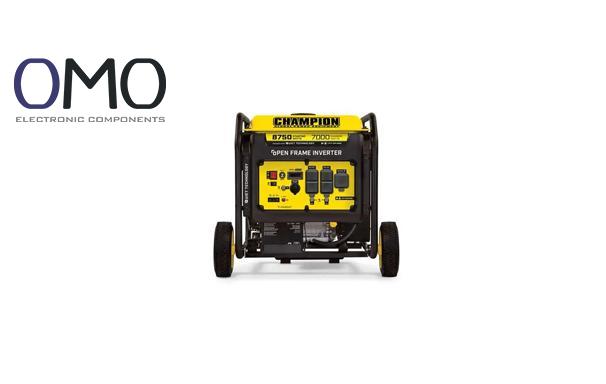
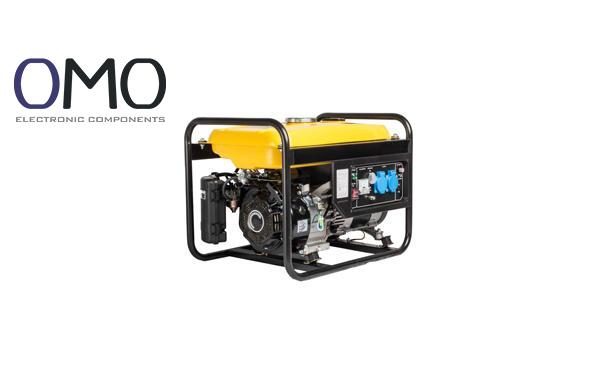
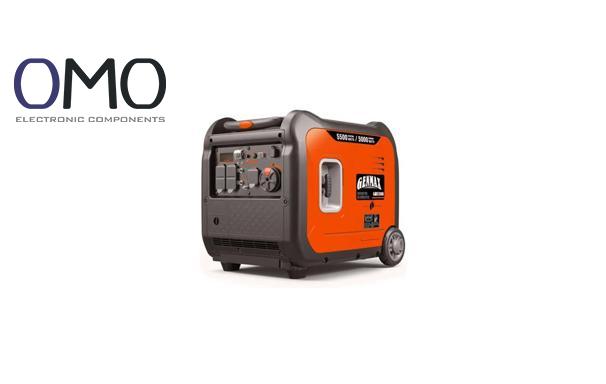
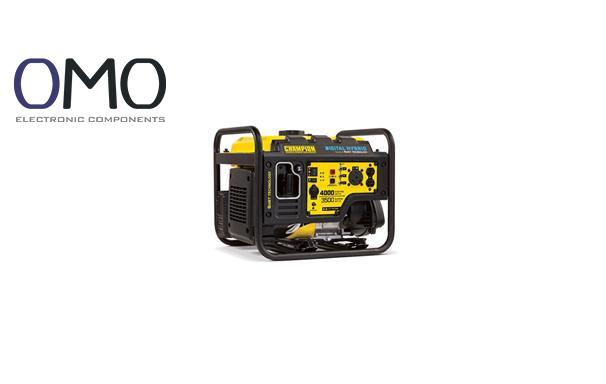
An inverter generator is not a simple generator. It first converts engine power into high-frequency AC (alternating current), then into DC (direct current), and finally changes it into clean and stable AC power using an inverter module. It is a high-efficiency power system with advanced inverter technology.
Main Components
It includes:
Engine: Provides basic power (usually gasoline or LPG).
AC Generator: Produces high-frequency AC.
Rectifier: Converts AC into DC.
Inverter Module: Key part; changes DC into low-distortion sine wave AC.
Control Circuit Board: Adjusts engine speed and power output smartly.
Support Systems: Muffler, fuel system, protective shell.
Main Fuel Types
Gasoline (most common)
LPG (liquefied petroleum gas or propane)
Diesel (for high-power models)
Dual/triple fuel models (more flexible)
Working Principle
The process is clear:
Engine drives built-in AC generator to produce unregulated AC.
Rectifier converts AC to DC.
Inverter processes DC and outputs stable sine wave AC.
Microprocessor watches the load and adjusts engine speed to improve efficiency.
Main Advantages
Clean Power: Very low THD (Total Harmonic Distortion, <3%), safe for sensitive electronics.
Fuel Efficient: Engine speed changes with load, saves 25–40% fuel.
Quiet Operation: Runs quietly due to variable engine speed and muffler design.
Portable: Smaller and lighter at the same power level.
Parallel Capability: Can connect several same units to increase power.
Main Disadvantages
High Initial Cost: More expensive than regular generators.
Limited Power: Usually below 7kW per unit.
Complex Maintenance: More electronic parts.
Low Overload Tolerance: Not ideal for heavy surges.
What Is a Traditional Generator?
Core Definition
A traditional generator (often called a synchronous generator) changes engine power directly into AC. The engine runs at fixed speed (e.g., 3000/3600 RPM) to match grid frequency (50Hz/60Hz). An AVR (Automatic Voltage Regulator) helps keep voltage steady.
Main Components
Includes:
Engine: Uses gasoline or diesel.
AC Generator: Stator and rotor work together to make AC.
AVR: Keeps voltage stable, but doesn't fix wave shape or frequency.
Basic Systems: Fuel, start system (pull-start or electric), air cooling, output ports.
Main Fuel Types
Gasoline (small models)
Diesel (medium/large and high-power models)
Natural Gas (NG)/LPG (some optional)Some industrial types support multiple fuels.
Working Principle
The process is direct:
Engine runs at high constant speed (e.g., 3600 RPM = 60Hz).
Rotor spins and induces AC in stator.
AVR detects voltage and adjusts excitation to stabilize it.
Frequency depends on engine speed; load changes can affect it.
Main Advantages
Lower Cost: Cheaper than inverter types with the same power.
High Power Output: One unit can give many kilowatts or even megawatts.
Simple Structure: Easier to maintain.
Strong and Durable: Works well in tough environments.
Good Surge Capacity: Starts big motors like pumps and compressors easily.
Main Disadvantages
Average Power Quality: Higher THD (>5% or even 10–25%), not safe for sensitive devices.
Low Fuel Efficiency: Uses more fuel at low loads.
Noisy Operation: Runs loud due to high engine speed.
Heavy and Bulky: Hard to move.
Voltage/Frequency Unstable: Changes with load.
Core Comparison: Inverter Generator vs. Traditional Generator
Summary Table
Feature
Inverter Generator
Traditional Generator
Core Tech
Engine + Rectifier + Inverter
Engine + AC Generator (AVR)
Power Quality
Excellent (THD <3%)
Average/Low (THD >5%)
Engine Speed
Variable (smart control)
Fixed (e.g., 3600 RPM)
Fuel Efficiency
Very High
Average/Low
Noise
Very Low
High
Size/Weight
Smaller and Lighter
Bigger and Heavier
Cost
Higher
Lower
Max Power
Limited (<7kW)
Very High (MW level)
For Sensitive Devices
Safe
Risky
Technology Difference
Traditional Generator: Direct conversion (mechanical → AC), frequency depends on engine speed, AVR adjusts only voltage.
Inverter Generator: Indirect path (mechanical → AC → DC → clean AC), uses electronics to control frequency, wave, and voltage precisely.
Waveform Quality
Inverter: Almost perfect sine wave, like home electricity, THD <3%.
Traditional: Wave depends on engine and AVR; may be stepped or distorted, THD >5–20%, risky for sensitive gear.
Performance Comparison
Power Quality
Inverter: Key strength. Ideal for laptops, smartphones, medical devices (e.g., CPAP), and sound systems. Prevents damage or data loss.
Traditional: THD is high. Only okay for lights, heaters, and simple tools.
Fuel Efficiency and Run Time
Inverter: Key strength. Engine slows at low load (e.g., phone charging), saving 25–40% fuel and lowering cost.
Traditional: Engine always runs fast, fuel use stays high even at low load.
Noise Level (dB(A))
Inverter: Key strength. Very quiet at 50% load (around 54–58 dB), even quieter at 30% (about 50 dB).
Traditional: Noisy (65–75 dB or more), like traffic or vacuum cleaner.
Weight, Size, and Portability
Inverter: Compact and light (e.g., 2kW = ~20kg), easy to move or store.
Traditional: Heavier and larger (e.g., 2kW = 30–40kg), hard to carry.
Power Range and Surge Capability
Traditional: Wide range (kW to MW), strong surge capacity for welders, pumps, compressors.
Inverter: Usually below 7kW, weaker surge, but can combine units for more power (e.g., 2×3kW = 6kW).
Cost and Durability
Purchase Cost: Traditional units are cheaper to buy.
Operating Cost: Inverter units use less fuel in the long run.
Durability: Traditional units are stronger in extreme conditions. Inverter units may be weaker due to electronics.
Need medium/small power (under 7kW), with changing loads.
Care about the environment and easy use.
When to Choose a Traditional Generator
Choose traditional if you:
Need to run big machines or tools with high startup power.
Need high power (>10kW) for long time from one machine.
Have a small budget and want lower upfront cost.
Power simple things like lights and basic tools.
Can accept noise (remote site, industrial zone, farm).
Work in harsh conditions and need strong equipment.
Prefer to fix simple machines with basic tools.
Frequently Asked Questions
What is inverter generator?
Using advanced electronic circuitry, inverter generators are portable units designed to deliver clean, stable, and highly efficient electricity.
How do generators work?
The function of a generator is to transform mechanical energy into electrical energy via electromagnetic induction.
What is the life expectancy of an inverter generator?
While inverter generators generally have a lifespan of approximately 10 years, their actual service life depends on factors such as frequency of use, build quality, and operating environment.
What can you run off an inverter generator?
Inverter generators can handle various devices, from sensitive electronics to household appliances. For example, a 1000-watt unit typically powers items like a TV, lights, and a small crockpot, whereas a larger 3500-watt generator supports heavier loads such as a refrigerator and a sump pump.