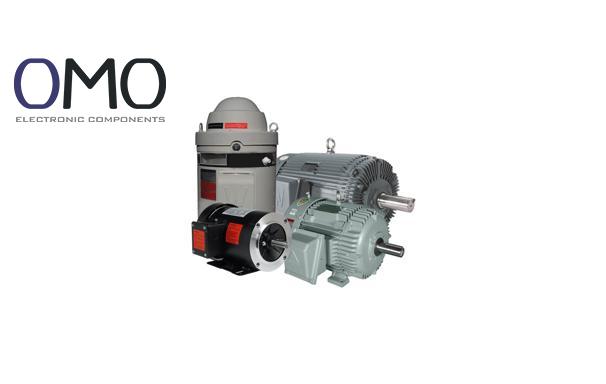
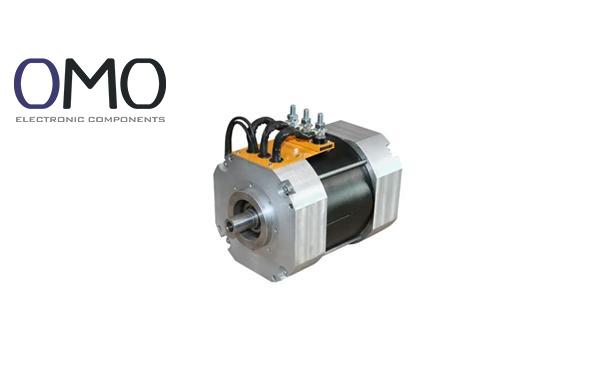
An electric motor is an electromagnetic energy conversion device. It takes in electrical energy and uses internal electromagnetic force to output mechanical energy in the form of rotation or linear motion. This function makes motors essential in modern life:
In industry, they drive pumps, fans, and conveyor belts.
In transportation, they move electric vehicles and assist systems.
At home, they power washing machine drums, fridge compressors, and air conditioner fans.
The motor's performance affects efficiency, power use, and reliability.
Basic Working Principle (Electromagnetic Induction)
All motors work based on key electromagnetic laws:
Ampère’s Law: Shows how electric current creates a magnetic field.
Faraday’s Law of Electromagnetic Induction: Explains how a changing magnetic field creates voltage (electromotive force) in a conductor.
Lorentz Force Law: Shows the direction of force on a conductor in a magnetic field.
Energy Conversion Process:
Magnetic Field Creation: Current flows through the stator (fixed part) winding or uses built-in permanent magnets to create a magnetic field.
Rotor Action: This magnetic field acts on the rotor (rotating part). In induction motors, it creates current in the rotor. In permanent magnet or excited motors, the rotor's magnetic poles interact with the field.
Electromagnetic Force: The magnetic field and rotor current (or magnetic poles) interact to produce tangential electromagnetic force, based on the Lorentz law.
Mechanical Output: The force rotates the rotor and delivers torque to the load through the shaft.
Imagine a rotating magnetic field pulling the rotor — this is how electromagnetic torque works.
Main Components
Most motors have these parts:
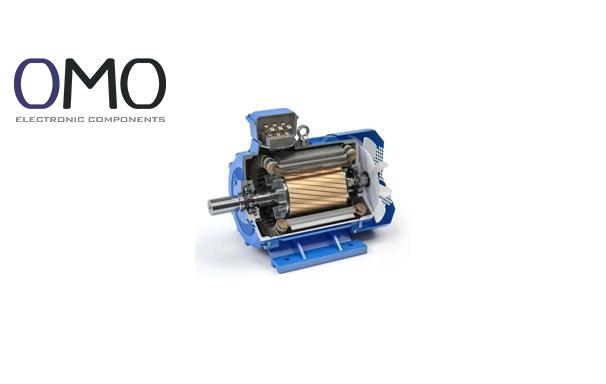
Stator: The non-moving part inside the housing. It creates the main magnetic field using permanent magnets or current in coils.
Rotor: The rotating core inside the stator. It delivers torque through the shaft. Its structure changes with motor type (coils, permanent magnets, squirrel-cage).
Air Gap: A small but important space between stator and rotor. It must be small to reduce magnetic loss but big enough to allow rotation. It affects motor performance.
Brush and Commutator (for DC/Brushed Motors only): These mechanical parts transfer current from the fixed part to the rotor. They wear out and need maintenance.
End Caps and Bearings: Support the shaft and allow smooth, low-friction rotation.
Housing: Protects the motor, helps heat go out, and supports installation. In brushless and permanent magnet synchronous motors, sealed housings reduce dust entry and allow long, maintenance-free use — this is advantage point 1.
Efficiency and Performance Indicators
Key indicators to measure motor performance:
Efficiency (η): Output mechanical power ÷ input electrical power (%). Losses come from:
Copper loss (heat from wire resistance),
Iron loss (core magnet loss),
Friction,
Stray loss.Modern high-efficiency motors (like IE3 or IE4) are very important.
Power Factor (PF) (for AC motors): Ratio of real power (used for work) to apparent power (voltage × current). High-efficiency permanent magnet synchronous motors (PMSM) often have PF > 0.95 — this means better power use and greener operation — this is advantage point 2.
Starting Torque: Torque when the motor starts (speed = 0). Important for heavy loads like water pumps.
Rated Speed and Torque: Safe speed and torque under normal use.
Speed Control Performance: How well the motor changes speed. Different motor types vary a lot.
Temperature Rise and Cooling: Heat increase during operation affects insulation life. Good cooling design is important.
Main Types and Differences
By Power Supply
DC Motors
Brushed DC Motor (BDC): Simple structure, low cost, easy speed control (by voltage). But needs brush/commutator replacement. Brushes create sparks, noise, and wear. Used in toys, low-cost drives, and car starters.
Brushless DC Motor (BLDC): Uses electronic controller instead of brushes.
Main advantages:
No brush = less maintenance,
Longer life,
Higher efficiency (>85%),
Lower noise and less interference,
Higher speed.
Uses high-quality permanent magnets. Common in fans (PC cooling), appliances (inverter washing machines), e-bike wheels, cordless tools.
AC Motors (Main type in industry)
Induction Motor (IM):
Single-Phase: Very simple and cheap. Needs a start capacitor. Used in home appliances like fans, blenders, and small pumps.
Three-Phase: The main industrial motor (used in 70%+ of industrial power systems).Strong, reliable, low maintenance, cost-effective. Uses a squirrel-cage rotor. Needs inverter for speed control. Less efficient at no-load or light load. Used in pumps, fans, compressors, and conveyors.
Synchronous Motor (SM):
Electromagnetic Excited: Rotor speed matches power frequency. Power factor is adjustable. Used where exact speed is needed (big compressors, fans).
Permanent Magnet Synchronous Motor (PMSM):
A high-performance type:
Very high efficiency (IE4/IE5),
Small size for same power,
High torque density,
Excellent speed control with an inverter.
More expensive due to magnets. Used in EVs, servo systems, and top-level inverter compressors (like air conditioners).
Special Purpose Motors
Stepper Motor: Converts pulses to fixed-angle rotation. Usually open-loop (no feedback).
Key benefit: Precise position and speed control (high torque at low speed).
Used in 3D printers, CNC tables, desktop meters, robot joints.
Servo Motor: High-performance motor with encoder feedback (position/speed).
Works in closed-loop control systems.
Features: Very fast response, high accuracy in position/speed/torque.
Used in robot arms, CNC spindles, and precision machines.
Linear Motor: A flat motor with direct linear thrust, no mechanical parts.
Advantages: Very fast, precise, no backlash, maintenance-free.
Used in maglev trains, semiconductor machines, laser cutters.
Universal Motor: Works with both AC and DC.
Features: Compact, very high speed (over 20,000 RPM), strong start torque.
Used in drills, grinders, vacuums, juicers.
Switched Reluctance Motor (SRM): Rotor has no coils or magnets.
High-efficiency, low-maintenance motors save more over time.
Maintenance and Management
Maintenance needs:
Is regular maintenance acceptable (like greasing bearings or replacing brushes)?
If not, choose maintenance-free motors (like BLDC/PMSM/IM).
Low-maintenance motors reduce downtime and labor costs.
Spare parts and support:
Can the supplier provide spare parts quickly?
Is technical support responsive?
Local service is very important.
Simplify selection process:
Define requirements:
Quantify load characteristics (Power P, Torque T, Speed N, Inertia J) and duty cycle (S1–S6)
Identify constraints:
Confirm power specs and environment limits (temperature/IP/explosives)
Initial type screening:
Low-cost, fixed-speed, durable → Three-phase Induction Motor (IM)
Medium speed control, high starting torque, AC/DC compatible → Brushed DC (BDC) or Universal Motor
High speed, low maintenance, AC/DC compatible → BLDC (Brushless DC Motor)
High efficiency, wide control, precise → PMSM (Permanent Magnet Synchronous Motor) or Servo Motor
Position open-loop control, cost-effective → Stepper Motor
High-speed, ultra-precise linear movement → Linear Motor
Weigh dimensions:
In screened types, compare efficiency, noise, cost, size, and control complexity.
Confirm model:
Choose the final motor model.
Recheck rated specs, protection level (IP), mounting size, connection interfaces (power/control/feedback), and compliance with all standards.
Frequently Asked Questions
What are the different types of electric motors?
Electric motors fall into two primary categories: DC motors (such as brushed, brushless DC, stepper, and servo types) and AC motors (including synchronous and induction motors, with induction motors further split into single-phase and three-phase).
What is the most powerful type of electric motor?
Large-scale synchronous motors, engineered for heavy-duty industrial settings, typically represent the most powerful electric motor type. They deliver exceptional efficiency and operational stability even under significant loads, establishing their practical dominance.
How to test an electric motor?
Begin by verifying the motor is de-energized. Conduct an insulation resistance test on the windings using a megohmmeter. Following this, measure the winding resistance values between all phase combinations (A-B, B-C, C-A) using a digital multimeter. Proceed by manually rotating the motor shaft to detect any unusual bearing noise, roughness, or binding. Finally, re-energize the motor under no-load conditions to assess its running performance.
What is the strongest electric motor?
Koenigsegg's 'Dark Matter' motor, the world's most powerful electric motor available today (as used in the Gemera), produces 600 kW and 1,250 N·m of torque from a package weighing only 39 kg, reaching up to 8,500 rpm.