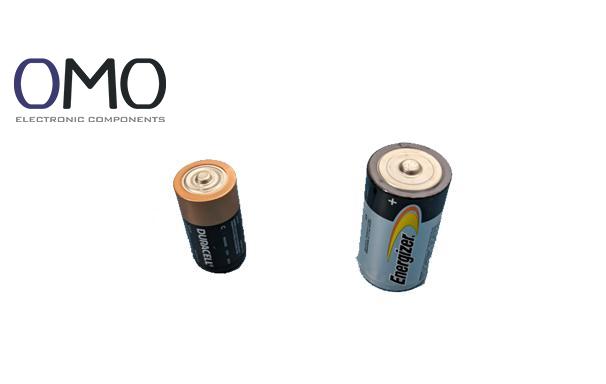
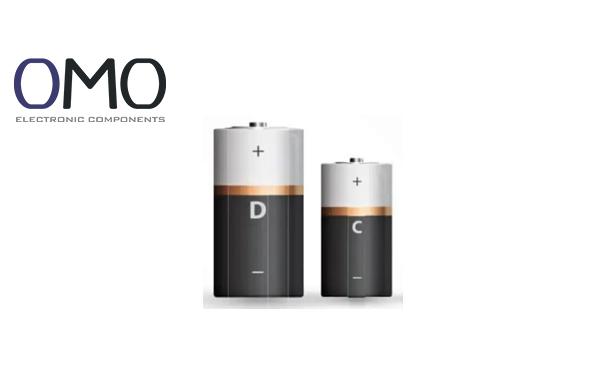
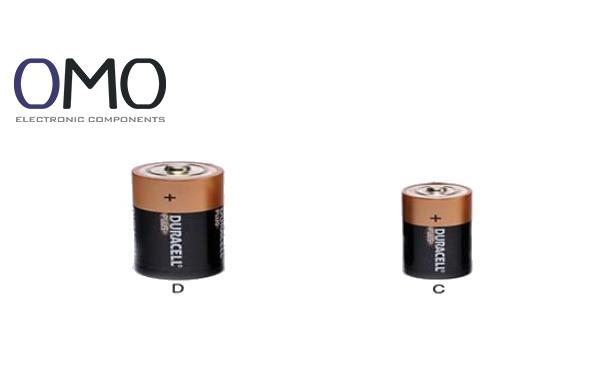
C batteries are medium-sized cylindrical batteries. People use them in many portable devices. The typical voltage is 1.5V (for disposable batteries) or 1.2V (for rechargeable ones). They balance size and capacity.
Chemical Types
There are three main types of C batteries:
Alkaline battery: 1.5V. Typical capacity is about 8000mAh. It has good price and low self-discharge.
Carbon-zinc battery: 1.5V. Capacity is lower (about 30–50% of alkaline). It is cheap but has weak performance.
Nickel-metal hydride (NiMH) rechargeable battery: 1.2V (fully charged about 1.4V). Capacity is 4000–6000mAh. You can recharge it hundreds of times.
Physical Size and Dimensions
According to IEC standard, C batteries have fixed size:
Diameter: ≈ 26 mm
Height: ≈ 50 mm
Weight: About 70g for alkaline; NiMH is slightly heavier due to electrolyte.
Terminals: One raised metal positive (+) cap and one flat negative (-) base.
Main Features
Core power: Better current and capacity than AA/AAA batteries. Good for medium power needs.
Balanced design: More portable than D battery, lasts longer than AA. Fits in limited space.
Economical: Cheaper than D batteries. Alkaline is easy to find. NiMH is cost-effective over time.
What Is a D Battery?
Chemical Types
Alkaline battery: 1.5V. Very high capacity, usually 12000–18000mAh.
Carbon-zinc battery: 1.5V. Lowest capacity. Only good for very light loads.
NiMH rechargeable battery: 1.2V (charged ~1.4V). Capacity 8000–12000mAh. Good for frequent, high-power use.
Lithium battery (e.g., LiFeS₂): 1.5V (initial voltage can reach 1.8V). Capacity is as high or higher than alkaline. Great in cold conditions. Lightweight.
Physical Size and Dimensions
Diameter: ≈ 34 mm (about 30% thicker than C battery)
Height: ≈ 61 mm (about 20% taller than C battery)
Weight: About 140g for alkaline. NiMH and LiFeS₂ are similar or lighter.
Terminals: Same as C battery (raised positive, flat negative).
Main Features
Energy storage: Much larger cell holds several times more energy than C battery.
Power source: High current and power output. Can run strong devices.
Long runtime: Lasts much longer than C batteries in the same device.
Size cost: Needs more space and is heavier.
Applications of C and D Batteries
Typical Uses of C Batteries
Medium-power flashlights/camping lights: Good brightness and decent runtime.
Portable radios/Bluetooth speakers: Enough power for normal volume.
Children's electric toys (medium-small): Like RC cars or toy pianos.
Emergency backup lights/small work lights
Portable meters/instruments: Such as thermometers, multimeters.
High-performance electric toys: Large ride-on cars, strong RC vehicles
Emergency lighting systems: Like big exit signs
High-power professional tools: Gas detectors, geological devices
Some old large hand tools: Electric drills, saws
Main power source for digital locks (multiple batteries in series)
Main Differences Between C and D Batteries
Size and Weight Comparison
Feature
C Battery
D Battery
Difference (D vs C)
Diameter (mm)
≈ 26 mm
≈ 34 mm
+8 mm (+30%)
Height (mm)
≈ 50 mm
≈ 61 mm
+11 mm (+22%)
Volume (cm³, approx)
≈ 26.5 cm³
≈ 55.5 cm³
+29 cm³ (+110%)
Weight (g, alkaline)
≈ 70 g
≈ 140 g
+70 g (+100%)
Capacity and Energy Density
Capacity advantage: Bigger volume gives D batteries a large capacity boost.
Alkaline: D (12000–18000mAh) ≈ 1.5–2.25× C (8000mAh)
NiMH: D (8000–12000mAh) ≈ 1.5–2× C (4000–6000mAh)
Energy comparison (Wh) (example with alkaline):
C battery: 1.5V × 8Ah = ~12 Wh
D battery: 1.5V × 15Ah (mid-value) = ~22.5 Wh
D battery gives about twice the energy.
Energy density: Similar energy per volume/weight. D’s advantage comes from its size.
Discharge Performance
High-load runtime: For high-power devices like bright lights or motors:
Imagine two same-model flashlights (designed for D batteries):
With new C batteries: Brightness drops in a few minutes.
With D batteries: Brightness stays stable for a long time.
D battery runtime is 1.5 to 2× or more.
Voltage stability: D batteries handle high current better.
Less internal voltage drop, keeps motor speed or sound volume stable.
C batteries drop voltage faster under heavy load.
Battery Life and Durability
Runtime in Same Device
Test case: Adjustable flashlight that can use either C or D (with adapter).
New same-brand alkaline batteries:
D battery: High brightness for 8–10 hours
C battery: High brightness for 3–4 hours
Conclusion: D battery runs 2–3× longer in high-power use.
Theoretical runtime: D battery (15Ah) ≈ 1.9× C battery (8Ah).
The gap grows as power usage increases.
Durability
Recharge cycle (NiMH): Good batteries last 500–1000+ charges, no big difference.
Shelf life (disposable):
Alkaline: 5–10 years
Carbon-zinc: 1–2 years, due to faster self-discharge
Cold performance: Lithium (e.g., LiFeS₂) works better below −20°C than alkaline or NiMH.
Can You Replace D Batteries with C Batteries?
Even though the voltage (1.5V or 1.2V) is the same, C batteries cannot and should not replace D batteries in most cases.
Size Fit
Size mismatch:
C battery (26mm) is much smaller than D slot (34mm)
Height also shorter (50mm vs 61mm)
Direct use problem:
Loose contact causes device to fail or stop randomly
Battery may shake, damage contacts, or cause short circuits
Adapter use:
Plastic adapter can make C battery "bigger"
Major flaws:
Adds resistance → voltage drop and energy loss
Less stable and reliable → may deform or fail over time
Cannot solve core problem of low capacity and poor output
Electrical Performance
Voltage match ≠ performance match
Main problems:
Too low capacity: C battery = 40–60% of D battery (same chemistry)
Too weak discharge:
D devices need high current
C batteries can't supply that much current
Consequences:
Device may not work well (dim light, weak motor, low sound)
C battery may overheat quickly
Overheat risk:
May cause leakage (alkaline/carbon-zinc), performance loss (NiMH), or rare safety risk
Replacement Advice
Strong advice: Always use the correct battery size
D battery slot → Use D battery
Rare emergency use (not recommended):
Only for very low power, very short time, with proper adapter
Example: One beep or quick light flash
Monitor heat — stop if warm
Summary:
Size: Direct replacement not possible. Adapter has limits.
Capacity/Current: C battery not enough. Short life. May overheat.
Final conclusion: Do not use C batteries in D battery devices. Always follow size guide!
Frequently Asked Questions
What size is C and D battery?
While C and D batteries are both cylindrical in shape, their sizes differ. A C battery generally ranges from 25.3 to 26.2 mm in diameter and 49.5 to 50 mm in height. Conversely, a D battery typically measures between 32.3 and 34.2 mm in diameter with a height of 59 to 61.5 mm.
What is a substitute for C batteries?
For replacements for type C batteries, consider rechargeable C-sized batteries (more expensive upfront but cost-effective over time) or AA battery adapters.
What are c batteries used for?
Duracell C batteries power a range of electronic devices that need dependable, moderately long-lasting energy. These include common items like toys, flashlights, clocks, and certain medical equipment.
How long do d batteries last?
The lifespan of D batteries depends on factors like battery type, usage, and the device they're used in. Typically, they provide several hours of power in high-drain devices such as flashlights, and can retain their charge for up to 10 years when stored properly in a cool, dry location.