
By Dryer Thermal Fuse 1596
Common Symptoms of a Burned Dryer Thermal Fuse
Main Causes of a Burned Thermal Fuse
How to Replace a Dryer Thermal Fuse
How to Prevent Future Thermal Fuse Failure
A dryer thermal fuse is a one-time overheating safety device. It is installed inside the dryer as a key safety part. Its job is to stop the electrical circuit forever if the temperature becomes too high. This helps prevent fire or machine damage. Unlike a resettable circuit breaker, you cannot reset a thermal fuse. You must replace it to make the dryer work again.
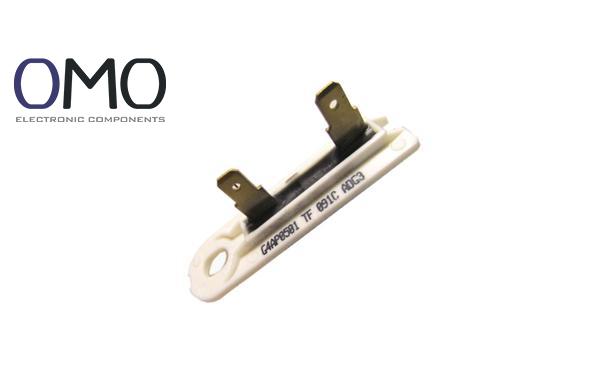
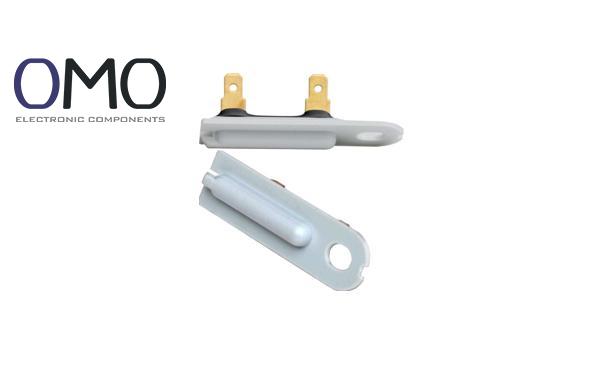
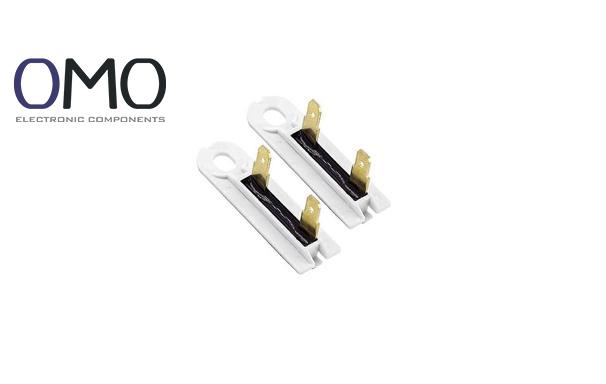
The thermal fuse usually looks like a small rectangle with a white or ceramic shell. It has two metal pins on each side. The outer shell uses heat-resistant material, so it works well in high heat. Every fuse has a marked temperature rating (example: 155°C) and voltage rating (example: 250V). These ratings must match the original part.
Product Advantage Comparison 1:
Compared with a normal fuse, a high-quality thermal fuse uses a ceramic shell. It increases heat resistance by about 40% and stays stable in high-heat environments.
Manufacturers carefully choose the position of the thermal fuse. It is usually inside the blower housing or near the heating element. This allows the fuse to sense airflow temperature and react quickly when overheating.
Different dryers have different accessibility levels:
| Dryer Type | Accessibility | Estimated Removal Time |
| Basic Top-Load Dryer | 3/10 | 5–10 minutes |
| Front-Load Dryer | 6/10 | 15–30 minutes |
| Built-in High-End Model | 8/10 | 30–45 minutes |
The thermal fuse works by a melting process. Under normal temperature, the internal alloy stays solid and keeps the electrical circuit connected. When the temperature is higher than the rated limit, the alloy melts and permanently opens the circuit. This design uses physical reaction only and needs no electronic control. Reliability is up to 99.8%.
When the fuse blows, the dryer can spin normally, but it produces no heat. You may feel cold air from the exhaust vent. This means the heating circuit is cut off while the control circuit still works.
In about 30% of dryers, the thermal fuse connects to the main control circuit. If it blows, the entire system loses power. When you press the start button, nothing happens — no lights and no display. You must check the power system to confirm the cause.
Some mechanical timer models may still spin the drum, but the timer does not move. The blown fuse stops the timer circuit.
Before deciding the thermal fuse is broken, check in this order:
Data Summary:
About 25% of dryer failures are caused by thermal fuse problems:
Airflow problems cause 70% of fuse failures. When airflow is blocked, hot air stays inside the dryer and temperature rises fast.
Possible blockage points:
Product Advantage Comparison 2:
Original brand thermal fuses use precise temperature calibration (±2°C). Low-quality replacements may have ±10°C error. Precision improves up to 5×.
When the thermostat fails, the heating element does not stop heating. Temperature continues to rise until the fuse blows. About 15% of cases come from a bad thermostat.
Low-quality fuses may melt too early or too late. Incorrect installation can affect heat transfer and damage the fuse.
| Cause | Probability | Typical Symptom |
| Restricted airflow | 70% | Long drying time and hot outer shell |
| Thermostat failure | 15% | Heat does not stop |
| Blower problem | 10% | Weak airflow, strange noise |
| Poor part quality | 5% | Fuse burns again soon |
Recommended maintenance:
Product Advantage Comparison 3:
Dryers with high-quality thermal fuses can last up to 12 years — 3–4 years longer than dryers with low-quality parts.
Do not overload the dryer. Load about 70–80% of capacity.
| Fabric Type | Recommended Space |
| Cotton | 40% free space |
| Mixed fabrics | 30% free space |
| Light fabrics | 20% free space |
Monthly:
Every 6 Months:
To check a dryer's thermal fuse, start by ensuring the appliance is unplugged and completely cool. Set a digital multimeter to measure resistance (ohms). Place the probes on the two terminals of the fuse. If the meter shows a reading near zero ohms, the fuse is good. If there is no reading (infinite resistance), the fuse has blown and must be replaced.
Begin by disconnecting the dryer from power, either by unplugging it or switching off the circuit breaker. The thermal fuse is usually located on the exhaust duct or by the heating element. Test it with a multimeter for continuity to confirm it has blown. If so, install a suitable replacement.
The thermal fuse in a dryer is a small, one-time-use safety device. It interrupts the electrical circuit if the dryer overheats, which prevents fires and damage. When this fuse trips, the dryer might not produce heat or may not start.
It is entirely possible to replace a dryer's thermal fuse on your own. The repair involves finding the fuse, verifying it's faulty with a multimeter (by checking for a lack of continuity), and then fitting a matching replacement. Equipped with common household tools and some patience, you can confidently get the job done.